Binance Hack 2026: Zero Trust DevSecOps Lessons for Cloud Engineers
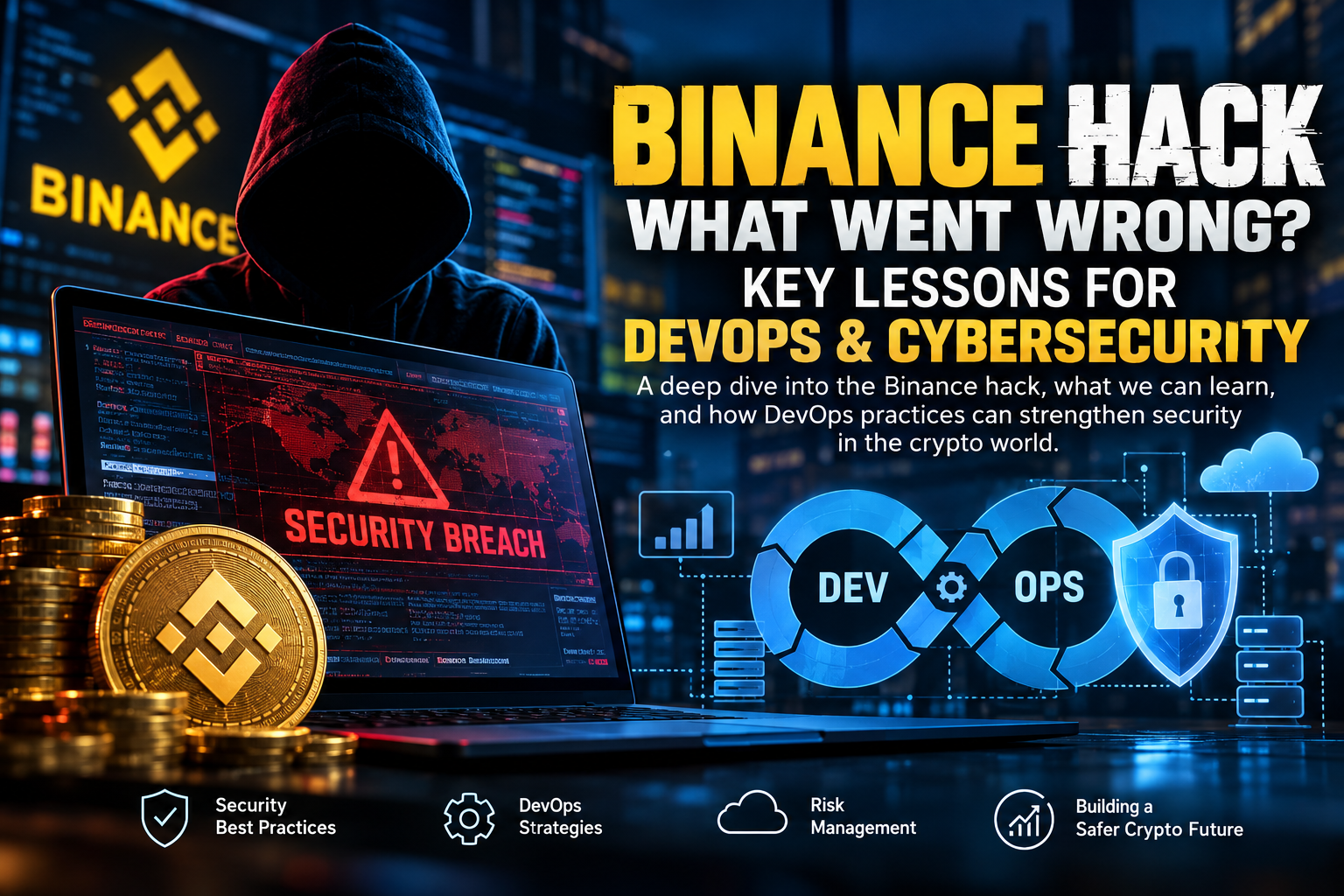
How a reported workstation compromise highlights the importance of Kubernetes RBAC, identity security, and production isolation.
In October 2026, Binance disclosed a security incident with an estimated impact of $6.3 billion.
Its initial investigation suggested that an attacker may have compromised a DevOps engineer's laptop, gained access to a service container, and submitted unauthorized withdrawal transactions.
The company has said that the investigation is still ongoing.
Rather than speculate about an unverified attack chain, I want to focus on something every DevOps engineer can evaluate:
What could an attacker access after compromising a privileged engineering workstation?
1. Your Laptop Is Part of the Security Architecture
A typical DevOps workstation may have access to AWS, Kubernetes, Git repositories, VPN networks, and internal administration tools.
Even without stealing a permanent credential, an attacker may attempt to abuse active authenticated sessions.
This is why endpoint security should be backed by independent production access controls.
2. Replace Broad Trust With Scoped Access
Avoid granting access simply because a device is connected to a corporate VPN.
Use identity-aware gateways, device posture verification, MFA, and access policies that depend on the application and operation.
The goal is to minimize unnecessary connectivity between developer workstations and sensitive environments.
3. Short-Lived Credentials Reduce Exposure
Prefer identity federation and temporary credentials over persistent access keys.
Review:
- Cloud IAM roles and permissions
- Kubernetes authentication mechanisms
- CI/CD service identities
- Long-running administrative sessions
- Credential revocation procedures
Short-lived credentials reduce the exposure window, but they don't eliminate the risk of live-session compromise.
4. Review Kubernetes RBAC
Start by asking which identities can execute commands inside production containers.
kubectl auth can-i create pods/exec \
  --namespace production
Also review permissions for pods/portforward, Secrets, workload updates, and RBAC changes.
Remember that Kubernetes RBAC permissions may be inherited through multiple RoleBindings and ClusterRoleBindings.
5. Restrict Network Reachability
A compromised service should not automatically have access to every database or internal API.
Use Kubernetes NetworkPolicies or compatible networking tools, along with workload authentication and application-level authorization.
For highly sensitive services, consider default-deny communication and explicit allowlists.
6. Separate Sensitive Operations From Ordinary Access
An engineer who can troubleshoot a service shouldn't necessarily have the authority to approve high-value transactions or destructive production changes.
Use independently enforced approvals, scoped service identities, transaction limits, and audit trails.
7. Detect Suspicious Runtime Activity
Review telemetry for unusual container processes, privileged API requests, abnormal network traffic, and unexpected workload modifications.
Tools such as Falco and eBPF-based observability can support detection, but they should complement cloud audit logs and endpoint security.
Read the Full Technical Breakdown
The original article includes a six-control Zero Trust framework, architectural considerations, example configurations, and an incident response playbook.
Binance Hack DevOps: Full Security Analysis
Final Thoughts
One compromised workstation shouldn't be enough to move freely across production systems.
Strong DevSecOps architecture reduces implicit trust and creates meaningful boundaries between endpoints, identities, workloads, and high-impact operations.
How is your organization limiting privileged workstation access to production?
Written by Naveed Ahmed — DevOps & Platform Engineering
About the author
- Senior DevOps, Cloud & Site Reliability Engineer at DigitalOcean. I write about modern container orchestration, Linux systems, and cloud-native architecture. Explore my guides, architectures, and portfolio: • Website: https://naveedkumbhar.com • Resume: https://cv.naveedkumbhar.com • Blog: https://blog.naveedkumbhar.com • Newsletter: https://news.naveedkumbhar.com
Comments
Join the discussionNo comments yet. Be the first to comment.