Vibe Coding vs Spec-Driven Development: GitHub Spec Kit Explained
Originally published on Naveed Ahmed's Engineering Blog.
We've reached a point where AI can generate a working application from a few sentences.
That's useful, especially when you're exploring an idea.
But there's a difference between generating an application and engineering a system that other people can safely maintain.
That's where Spec-Driven Development comes in.
1. Vibe Coding vs Spec-Driven Development
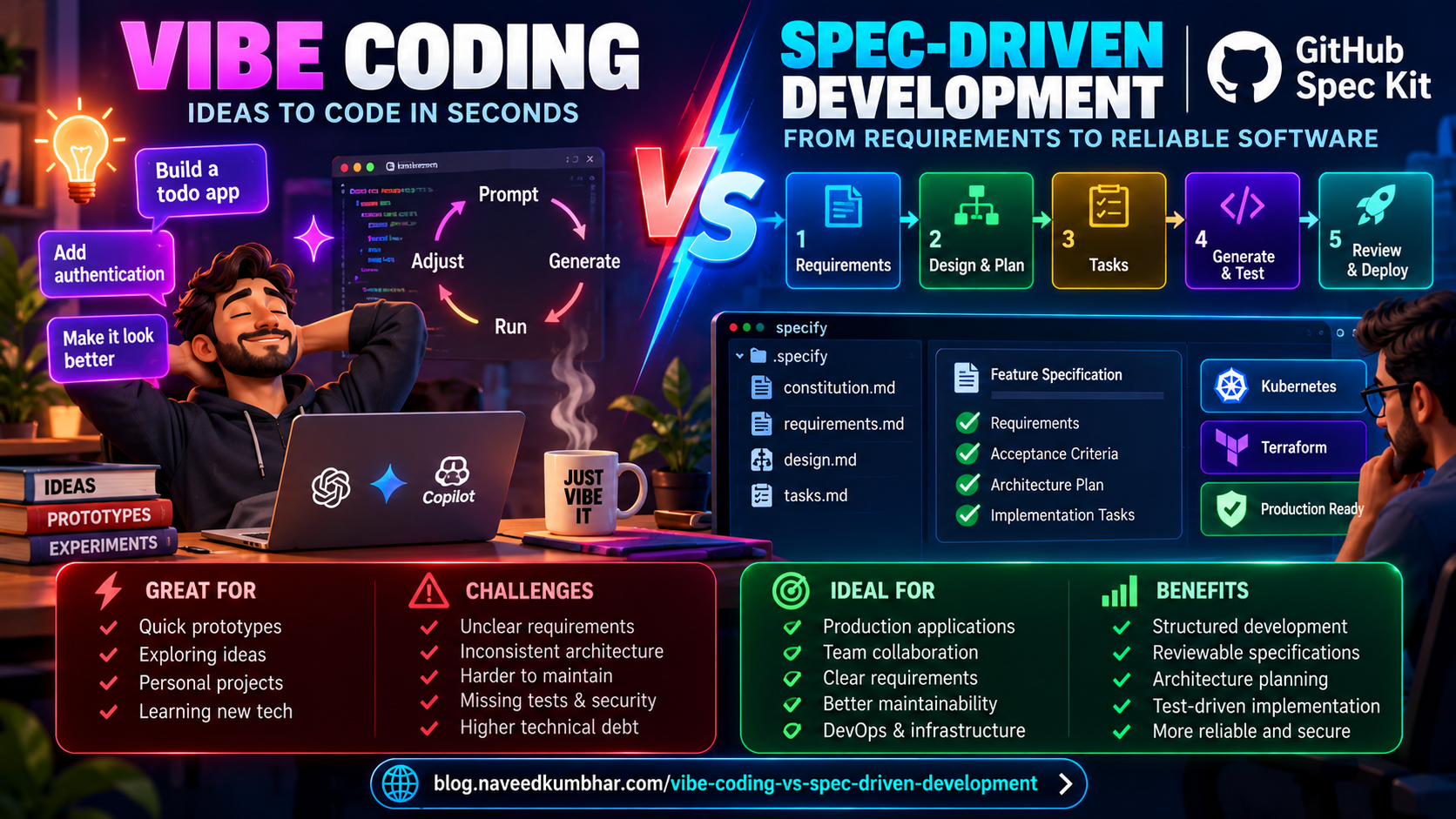
Vibe coding usually starts with an informal prompt and evolves through repeated iterations.
Spec-Driven Development starts by defining what the application must do, which constraints it must respect, and how success will be measured.
| Area | Vibe Coding | Spec-Driven Development |
|---|---|---|
| Starting point | Informal prompt | Written requirements |
| Architecture | Often evolves during generation | Planned explicitly |
| Collaboration | Chat context and code | Shared specifications |
| Testing | Can be added later | Acceptance criteria defined earlier |
| Ideal use | Rapid experimentation | Maintainable team projects |
Neither approach guarantees correct software.
But writing requirements down makes it easier to review and verify what an AI coding agent produces.
2. GitHub Spec Kit
GitHub Spec Kit provides a structured workflow for specification-driven AI development.
Instead of relying only on conversational prompts, you maintain artifacts for:
- Project principles
- Feature requirements
- Technical design
- Implementation tasks
To install the Specify CLI:
uv tool install specify-cli \
  --from git+https://github.com/github/spec-kit.git
Initialize a project:
specify init my-app --ai claude
The CLI sets up the foundation for a specification-driven project.
From there, you can use supported coding-agent commands to define features, create plans, and work through implementation tasks.
3. Why Specifications Matter in Kubernetes
Imagine prompting an AI assistant to generate a production Kubernetes Deployment.
It might produce valid YAML.
But valid YAML isn't automatically production-ready infrastructure.
Before generating manifests, define requirements such as:
- Minimum replica count
- CPU and memory requests
- Security context
- Readiness probes
- Network access controls
- Monitoring
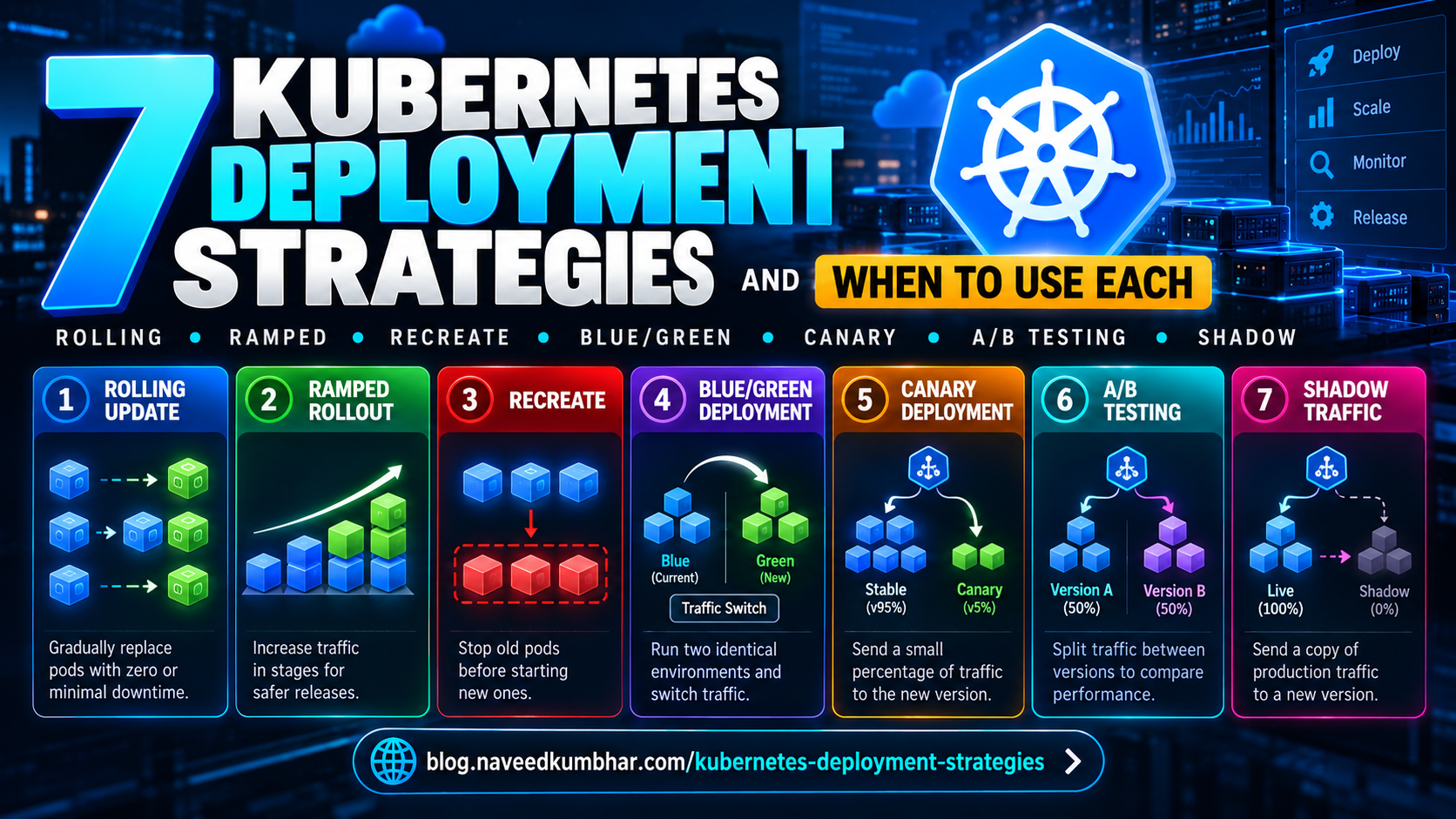
- Deployment strategy
- Rollback expectations
These requirements can be reviewed before implementation.
Then use schema validation, policy checks, tests, and deployment review to verify the generated resources.
4. A Practical Workflow
For production-oriented AI development, I'd recommend:
- Explore and clarify the problem.
- Write requirements and acceptance criteria.
- Define architecture and security constraints.
- Break implementation into manageable tasks.
- Generate and review code.
- Run tests and security checks.
- Verify the result against the specification.
This doesn't eliminate engineering effort.
It moves more decisions to the point where they can be reviewed before they become code.
Read the Complete Guide
My full tutorial covers GitHub Spec Kit, Specify CLI installation, project constitutions, technical plans, and applying Spec-Driven Development to DevOps infrastructure.
Read Vibe Coding vs Spec-Driven Development: Complete Guide
Final Thoughts
Vibe coding is useful for experimentation.
Specifications become more valuable as systems grow in complexity, risk, and maintenance requirements.
The most practical approach may be to combine both.
Do you use specification files when working with AI coding agents?
Written by Naveed Ahmed — Lead DevOps & Platform Architect
About the author
- Senior DevOps, Cloud & Site Reliability Engineer at DigitalOcean. I write about modern container orchestration, Linux systems, and cloud-native architecture. Explore my guides, architectures, and portfolio: • Website: https://naveedkumbhar.com • Resume: https://cv.naveedkumbhar.com • Blog: https://blog.naveedkumbhar.com • Newsletter: https://news.naveedkumbhar.com
Comments
Join the discussionNo comments yet. Be the first to comment.